
Early Ward Eight
Uncle Bob recalled that for a number of years there were no nearby neighbors. Families drove fat hogs and turkeys to market at Alexandria, and when he was grown there were only about fifteen or twenty families in Ward Eight.
History and Legacy
From early homesteads to generations of student opportunity.
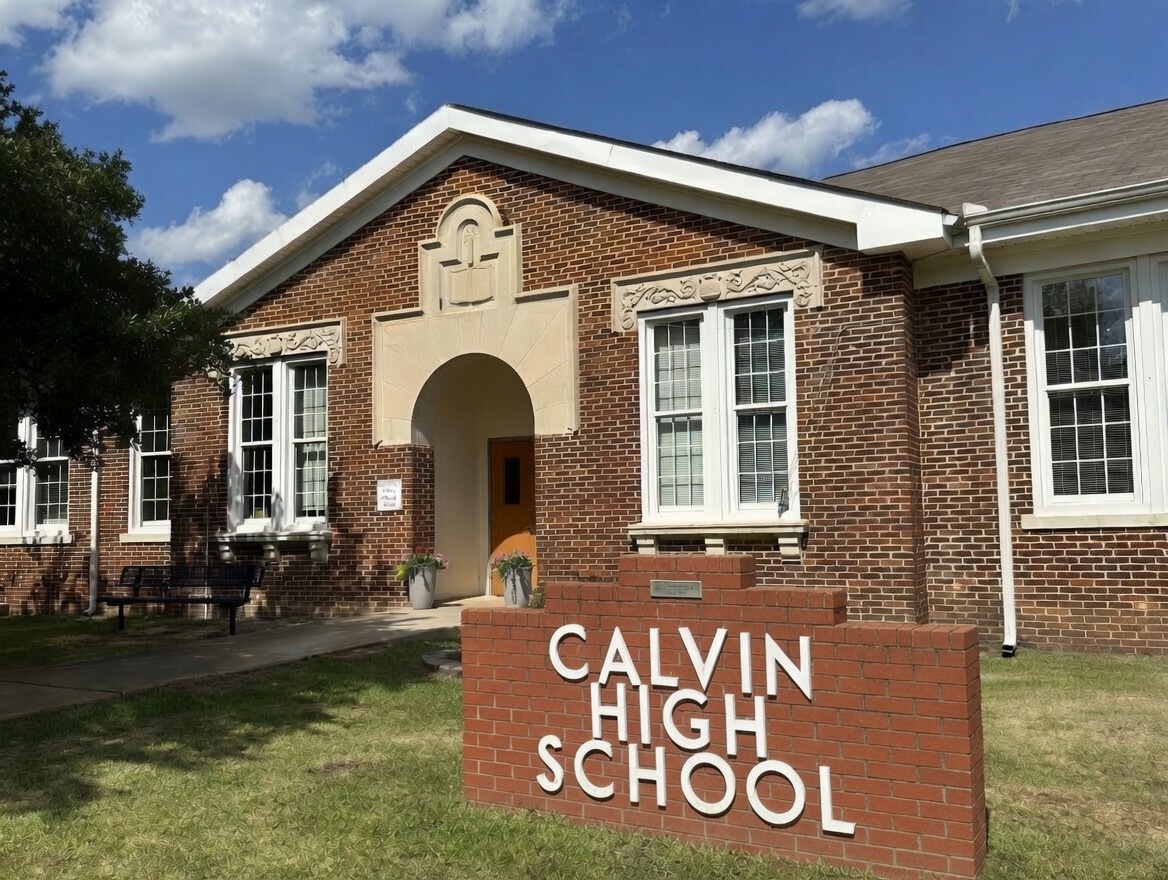
Calvin High School's story is rooted in family settlement, railroad growth, local industry, church life, community leadership, and a lasting commitment to educating children close to home.
Community Origins
In 1843, William Carter started from Arkansas toward Texas with his family behind an ox team. When he reached the homestead where his son, Uncle Bob Carter, later lived, he bargained for a small pole hut owned by Jerry Duplissey and decided to wait until the following year to complete the journey.
After making a good start that first year, Carter settled permanently. He reared two daughters and four sons, including two who fought in the Civil War. Uncle Bob Carter remained on his father's homestead, while his brother Calvin settled nearby.
Railroad, Mill, and Town
Uncle Bob recalled that for a number of years there were no nearby neighbors. Families drove fat hogs and turkeys to market at Alexandria, and when he was grown there were only about fifteen or twenty families in Ward Eight.
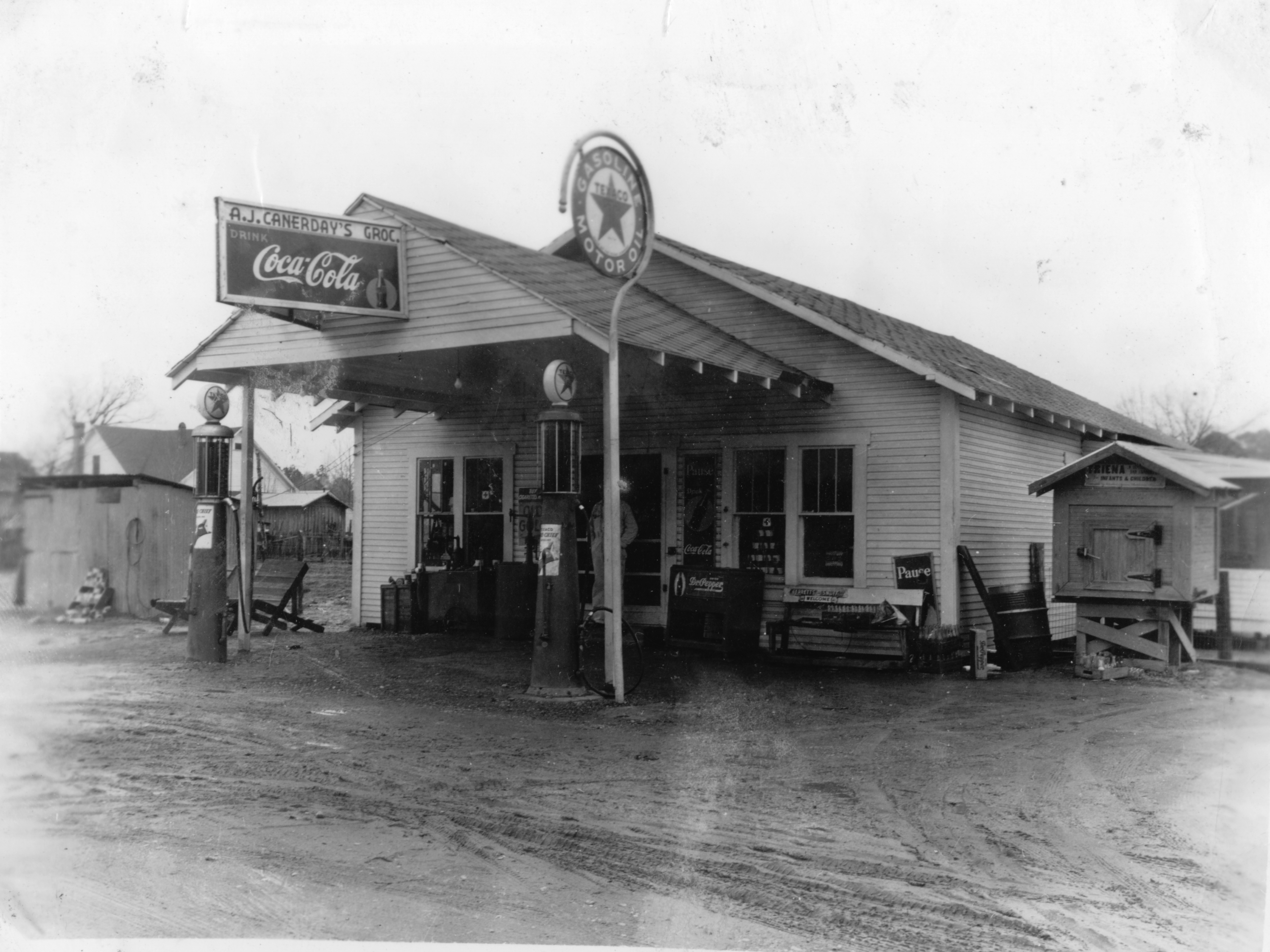
In 1901 the L. & A. Railway Company graded the road through the area. Steel was laid in 1902, and that same year John Swanson of Dodson put in a twenty thousand dollar sawmill that later became the Dallas Lumber Co.
The town was first built on the Carter estate and naturally called Carter. Because Carter and Castor were easily confused by freight agents, the name was changed to Calvin in honor of Uncle Calvin Carter.
Church and School
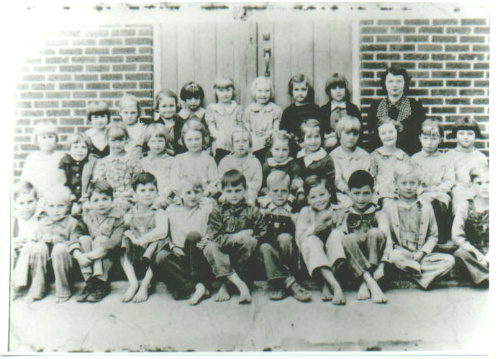
Prior to the early 1900s, education in the area was often provided through home tutoring for families who could afford it. As Calvin grew, the people recognized the need for a school and began work on a school building in 1903.
During that time, a Baptist minister came to Calvin and held a revival under the old gin shed. The community realized it also needed a church, and because there were not yet enough children for school, residents organized a Baptist church and met in the school building. The first school was organized in 1903 with Miss Gordie Puckett as teacher.
The citizens of Calvin took great pride in both church and school. Together, these institutions became a strong foundation for the community and helped shape generations of Calvin families.
School Growth
In 1909, a two-story school building was constructed near where the present school auditorium and cafeteria building stand. It included two classrooms on the ground floor and an auditorium on the second floor. Professor E.C. Bott was the first principal.
The school grew slowly but steadily into the early 1920s. In 1922, R.E. Oxford came to Calvin as educational leader. Through his leadership, hard work, and help from citizens, Calvin became an accredited high school in 1925-26. During his administration, a $5,000 addition was made to the old building.
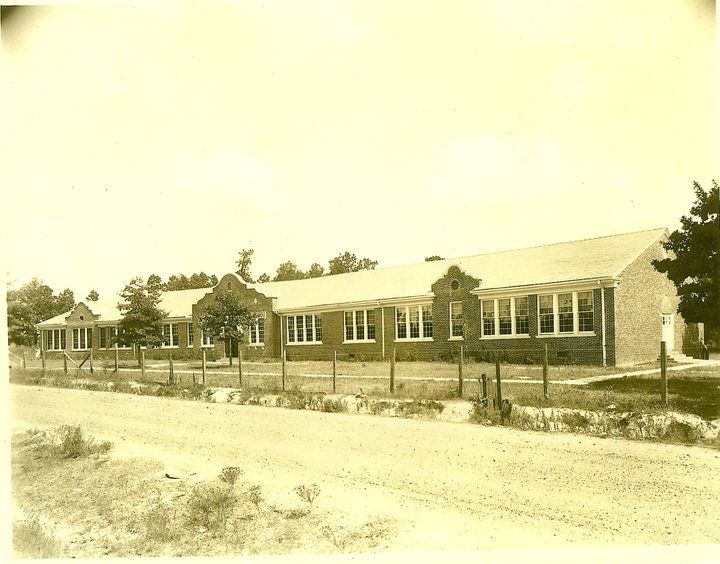
By this time, the schools of Rudd, Wattsville, Couley, and Shady Grove had united with Calvin. B.L. Kerney followed in 1926, improved library facilities, and helped give the school its first piano. L.R. Nelson served from 1928-32, and in 1929 a $57,000 modern brick structure was erected with seven classrooms, auditorium, library, laboratory, Home Economics department, storage room, and office.
Historic Milestones
William Carter stopped in the area while traveling from Arkansas toward Texas and chose to settle near the Carter homestead.
The L. & A. Railway was graded and steel was laid, connecting the community to new movement, commerce, and growth.
A sawmill was established, settlers were drawn to the area, and the community began taking shape around the railroad and mill.
The first Calvin school was organized with Miss Gordie Puckett as teacher.
A two-story school was constructed with two classrooms and a second-floor auditorium.
Under Principal R. E. Oxford, Calvin became an accredited high school.
A modern brick school building was constructed with classrooms, auditorium, library, laboratory, Home Economics department, storage, and office space.
Calvin's community has continued to support the school and needed improvements. The Calvin community has never failed a proposed bond for the school.
School Leadership
First teacher of the organized Calvin school.
First principal of the 1909 two-story school.
Led Calvin during the years when it became an accredited high school.
Improved library facilities and helped provide the school its first piano.
Served from 1928-1932, during the period when the 1929 brick building was constructed.
Later Leadership
Elected principal in 1932.
Came to Calvin in 1934, later returned in 1946, and served until retiring in 1969.
Served as principal for two years after G.H. Walker first led the school.
Succeeded L.V. DeCou as principal.
Girls basketball coach and teacher who became principal for the 1969-70 session.
Legacy
Calvin grew from family homesteads, railroad development, sawmill work, church life, and the shared effort of early settlers.
The community organized a school as the population grew, then continued expanding facilities as more families joined the campus.
Nearby schools including Rudd, Wattsville, Couley, and Shady Grove united with Calvin as the school became a stronger rural center.
Calvin High School has remained a symbol of local identity, student opportunity, and community perseverance for generations.
Alive Today
Calvin High School is not only a historic school. It is a living, active part of the community today, carrying forward the pride, work ethic, and commitment that generations of Calvin families helped build.
The school stands on the dedication of hardworking people from Calvin and across Winn Parish: families, teachers, principals, staff, students, alumni, churches, local leaders, and neighbors who believed that rural children deserved strong opportunities close to home.
That legacy is still visible in the students who learn, compete, lead, serve, and represent Calvin today. The school remains great and alive because the community behind it has never stopped showing up.
Historic Calvin